

Medical Gas
Introduction to Medical Gas Standards in Different Countries
Medical Gas Piping System is a multi-professional and multi-disciplinary system engineering and is the only life support system.
In developed countries such as Europe and the United States, there are strict and detailed specifications for its design, manufacturing, and use, such as the US NFPA (National Fire Protection Association), the UK HTM (Health Technical Memorandum 2025), and international ISO standards.
Development history of medical gas standards:
1960s: Department of Health and Social Servies – the first medical gas guide ” HTM2022″
1980s: DHSS and the British Medical Gas Industry Association cooperated to develop the British Department of Health standard – C11 document
1990s: HTM2022 was revised to include the contents of the C11 document. Germany issued medical gas pipeline standards
1. Why do we need standards?
When we think of standards, we always want to remember their advantages and disadvantages
We need to know the reasons behind the regulations
Ensure the basic safety and performance we need, as well as rational investment
2. Global medical gas standards
HTM 2022 – United Kingdom ( HTM 02 issued in 2006 )
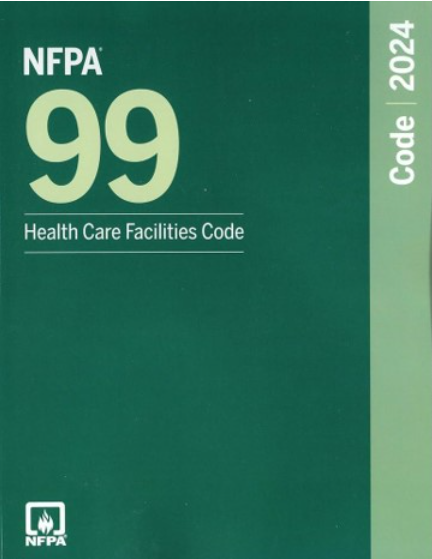
NFPA 99 – United States, covers: Install, Equipment safety requirements, on-site inspection, run, maintenance
ASSE6000 series, including: General Knowledge, Installers, Inspectors, Verifiers, Maintenance Personnel, Instructors, Designers
HTM02-01, United Kingdom, includes: design, Install, Verification and Acceptance, Operation Management, Department Responsibilities, Operation management policy, Operation and maintenance process and work permit system, HTM AP02 Authorized Personnel (Operation), HTM CP02 Safety Inspector (Maintenance), Training, Cylinder Management, Safety, Maintenance management, Dental Air Systems, Dental Vacuum Systems
ISO 7396-1 – General international standard covering: System equipment safety requirements, Install, Testing, debugging, certification, Operation Management
GB50751-2012 – Technical Specification for Medical Gas Engineering
AS 2896 – Australia
NF S90-155 – France
JIS T7101 – Japan
SIS HB 370 – Sweden
CAN/CSA-Z305.1-92 – Canada
3. Standard safety principles for medical gases
Regardless of the standard (norm), it is always for the same goal:
Great patient care!
First principles of medical gases:
Always supply gas to the patient
Second Principle of Medical Gases:
Medical gases are medicines
4. Comparison of different standards
4.1 Should it be a two-stage or three-stage gas source?

4.2 Is maintenance considered a “ normal” condition or a “single point failure”?


4.3 Medical air purity

5. Air
5.1 How to make air “ medical”?
No Medical Air Piped → Any Compressor, Any Source → Oil Free Clean Source → Guaranteed Pharmacopeial Quality Air
In most places around the world, most of the time, outdoor air meets or exceeds the pharmacopoeia regulations for medical air.
5.2 Compressor type
Piston Reciprocating
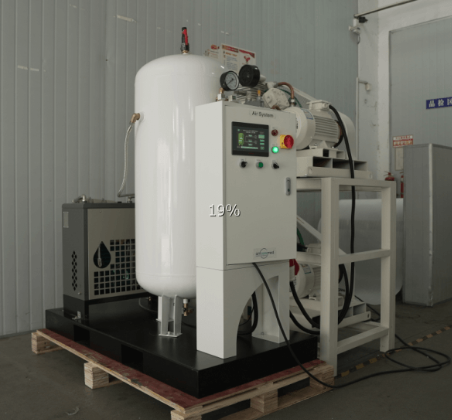
Scroll
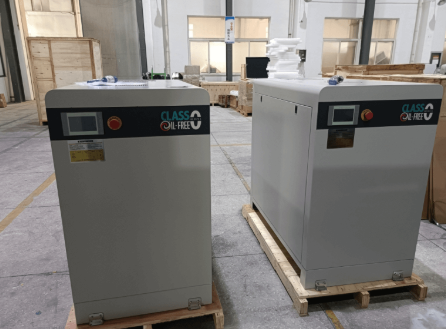
Oil Free Tooth
Oil Free Screw
Water injected Screw
Lube Screw
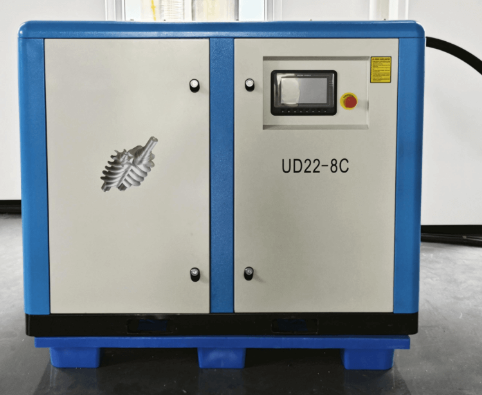
Lube PistonThe last two types of air compressors are not allowed by NFPA but are allowed/ by ISOHTM and are not recommended by GB.
5.3 Water in medical air

6. Medical vacuum
6.1 Requirements for vacuum pumps and gas tanks in different standards
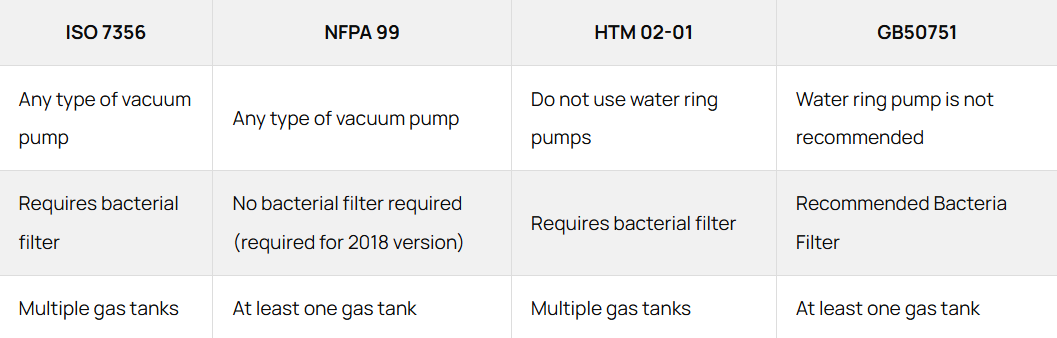
Now more and more countries require medical vacuums to be equipped with vacuum filters, considering the following:
Protecting equipment maintenance personnel
Eliminate any contamination that could flow back into the hospital and cause reputational damage
6.2 Vacuum flow

7. Anesthetic waste gas emissions
Ideal anesthetic waste gas pump
Operation: Drag the exhaust gas in the pipeline and pump it into the gas tank
Fire prevention: No fuel in the system to create a fire hazard
Low vacuum: Just enough vacuum, not too big
High flow rate ensures removal of waste gases
NFPA still allows five methods of venting waste anesthetic gases:Medical vacuum sharing (high vacuum sharing)
Independent vacuum (independent high vacuum)
Independent blower (independent vacuum)
Jet type, driven by non-medical air
Passive
8. Air source location design
GB50751-2012: When the air inlet is located in the station, the medical air supply source shall not be located in the same room as the medical vacuum manifold, dental vacuum manifold, and anesthesia waste gas exhaust system. The compressor air inlet shall not be located near the motor fan or conveyor belt, and the indoor air quality shall be equal to or better than that of the outdoor air, and shall be able to be supplied continuously;
Explanation of the clause:
If the indoor air is treated to be equal to or better than the outdoor air quality requirements, such as filtered air from an operating room ventilation system, medical air intakes may be installed indoors as long as the air quality can be maintained continuously;
When the medical air supply source is placed in the same station room as the medical vacuum manifold, dental vacuum manifold and anesthesia waste gas exhaust system, if the vacuum pump exhaust port leaks or is under maintenance, the air intake of the medical air unit may be contaminated, so it should be avoided;
The use of a device to convert carbon monoxide into carbon dioxide in the medical air compressor unit, or the installation of an independent air filtration system, can be regarded as an improvement in the quality of the intake air. Under the premise of ensuring the quality of medical air, the requirements for the position of the air inlet can be appropriately relaxed.
9. Liquid oxygen storage
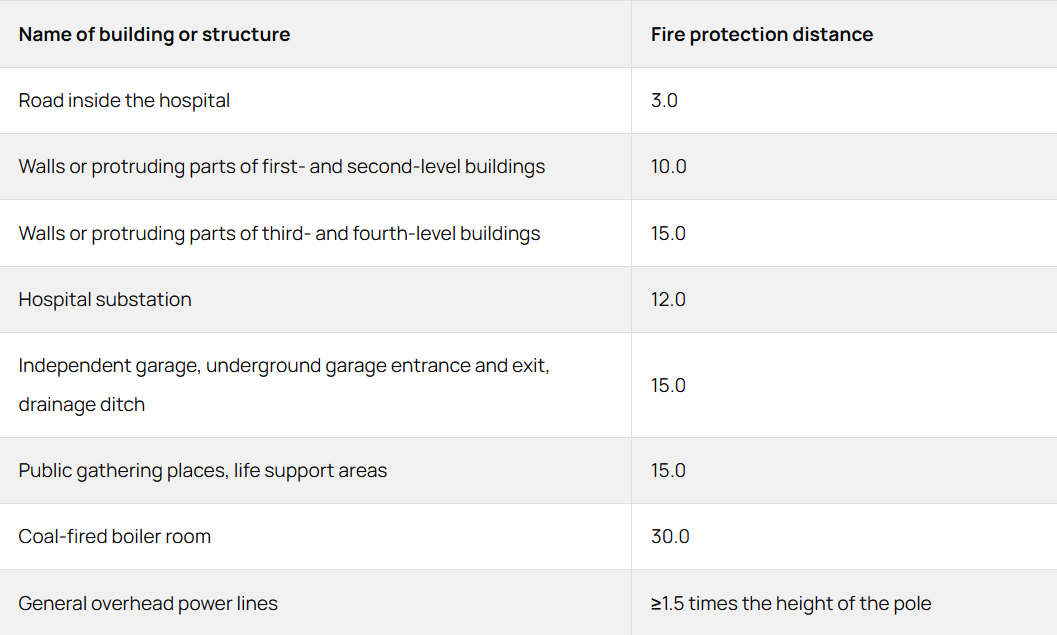
Note: When the exterior wall of the building facing the liquid oxygen storage tank is a fire wall, the fire separation distance between the liquid oxygen storage tank and the walls or protruding parts of the first and second level buildings should not be less than 5.0m; the fire separation distance between the liquid oxygen storage tank and the walls or protruding parts of the third and fourth level buildings should not be less than 7.5m. (GB50751-2012)
10. Valves (NFPA/GB)
The purposes of installing medical gas valves include:
Zone valve fire protection
Evacuate patients
The valve is set near the ward, so there is time to evacuate the patient
10.1 Zone valve setting requirements (NFPA/GB):
Area valves must be installed on the same floor
Each critical care or life support area must have its own zone valve.
Zone valves must be located outside the room containing the gas terminals and must be separated by a wall.
Zone valves must only control the outlet air on the same floor
Each anesthesia area (including light anesthesia, deep anesthesia and general anesthesia) must be equipped with an independent area valve outside the room
10.2 Zone valve setting requirements (HTM):
General ward – set up a zone valve near the ward entrance
ICU, recovery room, infant special care and other areas – set up a zone valve at the entrance, and set up another zone valve to control 4 and 8 beds. The 8-bed zone valve shall not control more than half of the gas terminals in any department;
Operating room – one zone valve at the entrance of each operating area (the operating area includes the operating room, anesthesia room and plaster room);
Vacuum area valves should facilitate maintenance and isolation of designated departments;
To avoid too many regional valves, some other departments (such as small operating rooms) with less than 10 terminals each should have at least one regional valve at the entrance of the department.
10.3 Zone valve box requirements
NFPA requires the installation of a pressure gauge. One valve box can be equipped with multiple gas valves and multiple pipe diameters.
NIST connectors must be installed on both sides of the HTM valve for emergency gas supply and purging during installation. One valve box for one gas, 2-3 pipe diameters
ISO is similar to HTM, but allows multiple gases to be configured in one valve box
11. Area sensor
Alarm sensor regulations (NFPA/GB)
All sensors in the life support area should be located on the “patient” side of the zone valve
The sensor for the anesthesia area can be set on either side of the zone valve: if set on the patient side, each zone must have its own valve
12. Medical gas manifold
Equipment used directly in life support areas
High reliability
Fully automatic switching
Prevent icing (CO2 and N2O)
Gas supply during power outages
Leakage (safety)
Combustion-supporting gas, such as oxygen
Toxic gases, such as nitrous oxide
Asphyxiating gases, such as carbon dioxide, nitrogen, etc.
13. Pipe and welding

14. Pipeline products
Why are copper pipes recommended?
Copper has antibacterial properties
High temperature resistance
Corrosion resistance
Easy to weld, reliable welding joints, no leakage